

-
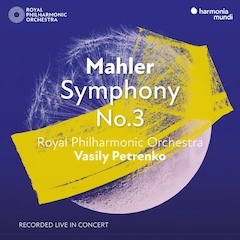
Recording of Mahler's Third Symphony released by Harmonia Mundi
The recording of the performance of Mahler's Third Symphony that took place in the Royal Albert Hall on 27 April 2023 will be released on the Harmonia Mundi label on 22 May. The Chorus joined mezzo-soprano Hannah Hipp, the Tiffin Boys' Choir, and the Royal Philharmonic Orchestra, and the performance was conducted by Vasily Petrenko. This is the second recording of the collaboration between the Royal Philharmonic Orchestra and Harmonia Mundi, the first being Rachmaninov's The Bells that was issued last November.
-
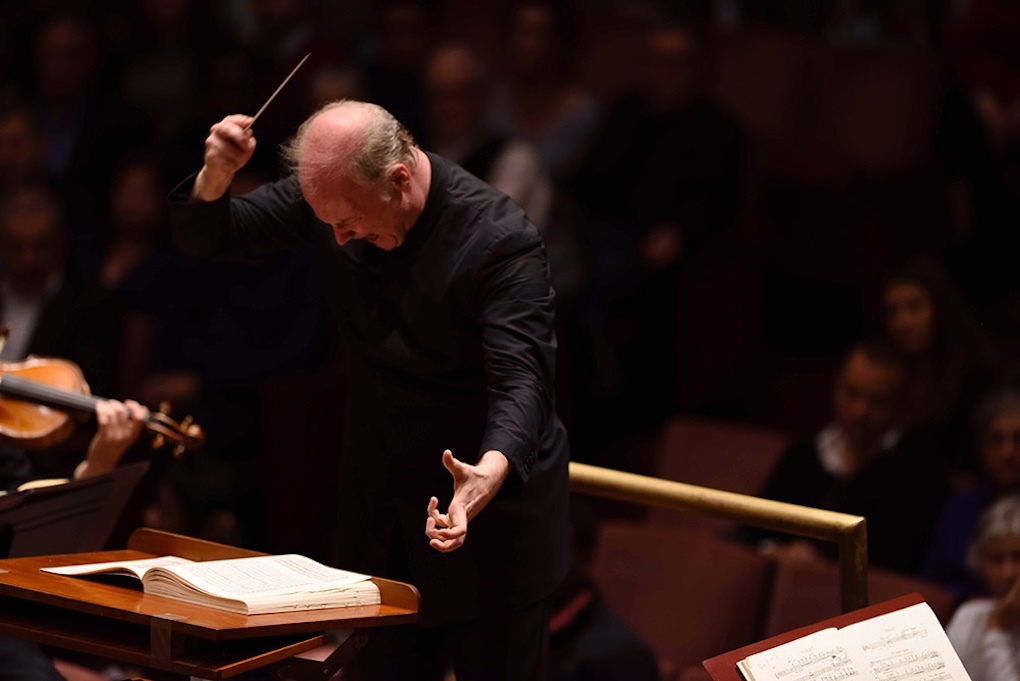
Beethoven at the Proms
On Monday 20 July the Philharmonia Chorus will take part in a performance of Beethoven's Ninth Symphony at the 2026 BBC Proms. The Chorus will join soprano Leah Hawkins, mezzo-soprano Stephanie Wake-Edwards, tenor Martin Muehle, bass Derek Welton and the BBC Philharmonic Orchestra. The performance will be conducted by the orchestra's conductor laureate, Gianandrea Noseda. The concert will be broadcast live by BBC Radio 3, and be recorded for future transmission on BBC TV and the iPlayer.
-
![005 Keri-Lynn Wilson UFO concert TW-ON Warsaw 25-02-2025 [photo Karpati&Zarewicz]1740564971173.jpg](https://boxstuff-development-thumbnails.s3.amazonaws.com/2092987_orig.jpg "005 Keri-Lynn Wilson UFO concert TW-ON Warsaw 25-02-2025 [photo Karpati&Zarewicz]1740564971173.jpg")
Verdi's Messa da Requiem with the Ukrainian Freedom Orchestra in St Paul's
On Tuesday 18 August, the Philharmonia Chorus will join the Ukrainian Freedom Orchestra in a performance of Verdi's Messa da Requiem in St Paul's Cathedral. The Ukrainian Freedom Orchestra is an orchestra composed of Ukrainian refugees who have fled the Russian invasion of Ukraine in 2022 and Ukrainian members of other European orchestras. It has undertaken an international tour every summer since. For this performance, the Chorus will join soprano Ailyn Pérez, mezzo-soprano Natalie Lewis, tenor René Barbera and bass Soloman Howard. The performance will be conducted by Keri-Lynn Wilson. Tickets can be bought here.
-
Mozart's Mass in C minor at Bold Tendencies
On Saturday 12 September the Philharmonia Chorus will take part in the final concert of Bold Tendencies 2026 season with a performance of Mozart's Mass in C minor. The Chorus will join the Philharmonia Orchestra, soprano Olivia Warburton, mezzo-soprano Anita Monserrat, tenor Liam Bothrone, and bass Daniel Vening. The performance will be conducted by Tess Jackson.
-
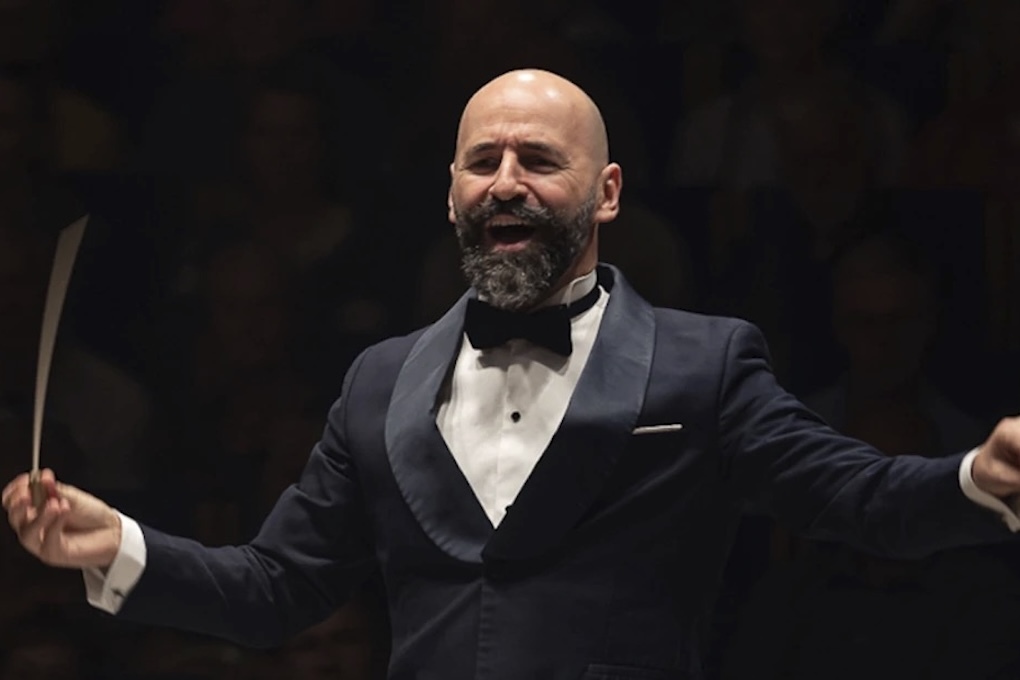
Bernstein's Kaddish Symphony in Paris with Les Siècles
On Thursday 1 October the Philharmonia Chorus will take part in a performance of Bernstein's Symphony No.3 'Kaddish' in the Théâtre des Champs-Elysées in Paris. The Chorus will join narrators Judith Pisar and Leah Pisar, soprano Rachel Willis-Sørensen, Maîtrise de Radio France, and Les Siècles. The performance will be conducted by Pierre Bleuse.
-
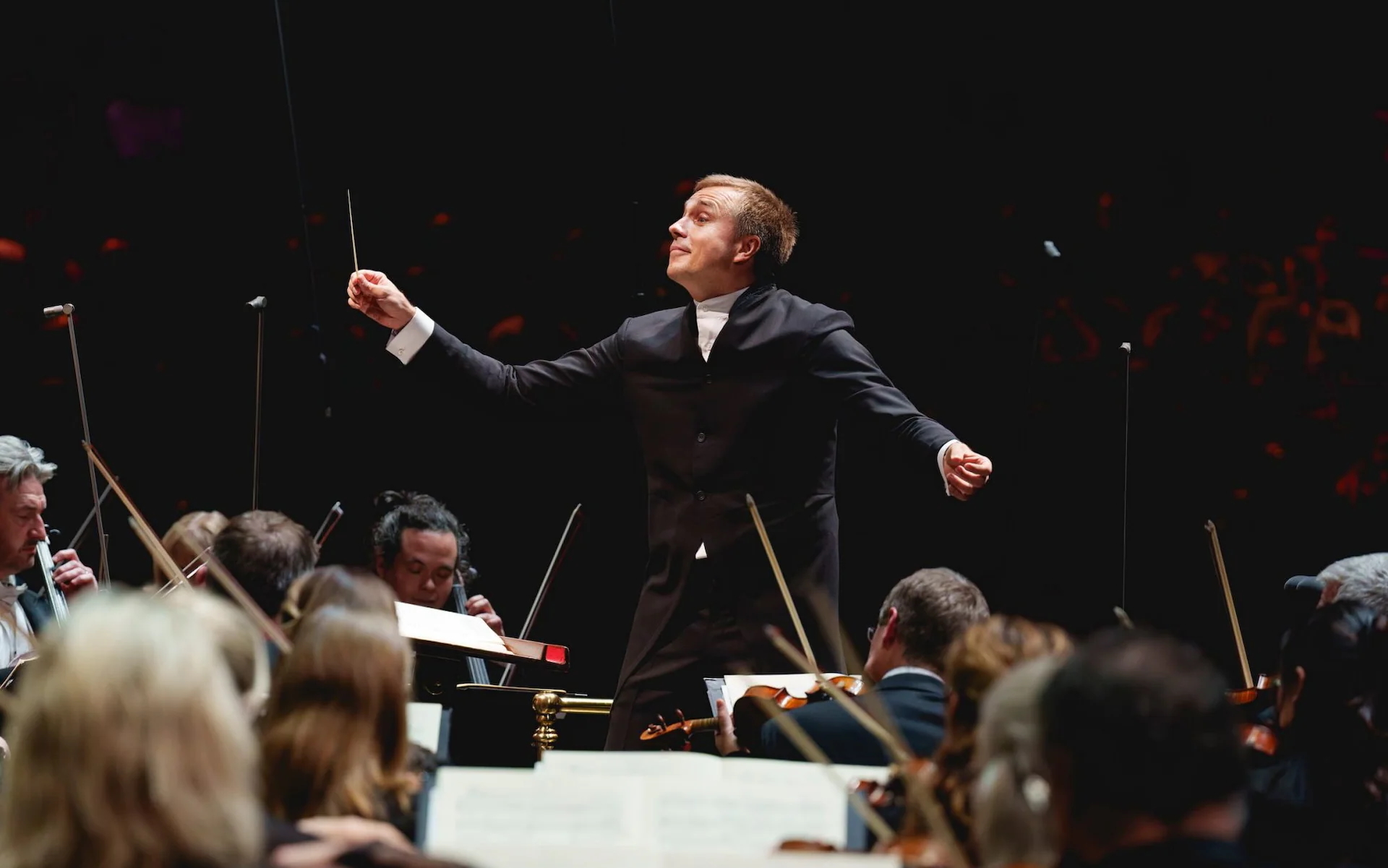
Bernstein's Chichester Psalms with Vasily Petrenko
On Tuesday 21 October, the Philharmonia Chorus took part in a performance of Bernstein's Chichester Psalms at the Royal Albert Hall. The Royal Philharmonic Orchestra was conducted by Vasily Petrenko. The solos were performed by treble Edward Scholes, and four members of the Chorus - soprano Elen Lloyd Roberts, mezzo-soprano Rhian Davies, tenor James Hutchings and baritone Christian Andreas.
-

World Première of Max Richter's Cosmology
On Thursday 15 May, the Philharmonia Chorus took part in the world première of Max Richter's Cosmology for chorus, organ and orchestra at the Royal Albert Hall. The Chorus joined organist Anna Lapwood, the Pembroke College Girls' Choir, and the Philharmonia Orchestra. The Chorus also took part in performances of Hans Zimmer's Chevaliers de Sangreal from The Da Vinci Code and the Interstellar Suite.
-
Philharmonia Chorus performs a Russian rarity: Taneyev's John of Damascus
Vasily Petrenko introduced something rare and very beautiful from his native Russia. Today, Sergei Taneyev is almost forgotten in the west, but as far as Tchaikovsky and Rachmaninoff were concerned he was a genius, and this heartfelt choral masterpiece packs a mighty emotional punch. The Philharmonia Chorus joined the Royal Philharmonic Orchestra for a performance of Taneyev's John of Damascus at the Royal Festival Hall, London on Sunday 17 May.
-
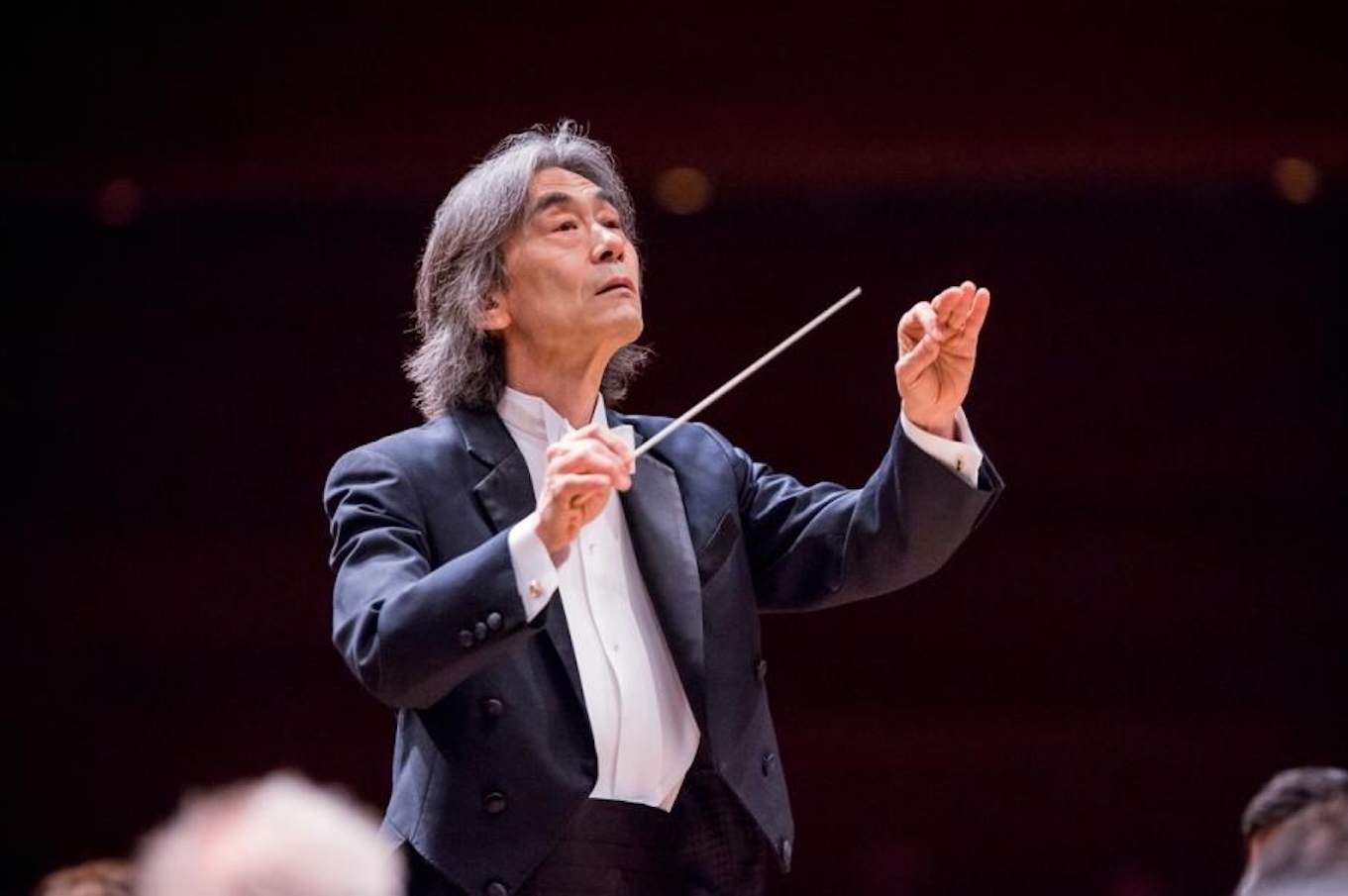
Mahler's Resurrection Symphony with Kent Nagano
On Thursday 19 March, the Philharmonia Chorus took part in a performance of Mahler's Second Symphony at the Royal Festival Hall. The Chorus joined soprano Jane Archibold, mezzo-soprano Christina Bock and the Philharmonia Orchestra, and the performance was conducted by Kent Nagano. The concert began with Hildegard of Bingen's O vis aeternitatis, performed by 12 singers drawn from the Philharmonia Chorus soprano section processing through the Royal Festival Hall.
-
Daphnis et Chloé with Esa-Pekka Salonen
On Wednesday 25 February, the Philharmonia Chorus took part in a complete performance of Ravel's Daphnis et Chloé with the Philharmonia Orchestra. The performance was conducted by the Orchestra's Conductor Laureate, Esa-Pekka Salonen, and was broadcast live on BBC Radio 3, and is available on the BBC Radio 3 website until 12 March. The Philharmonia Chorus can be seen in rehearsal for this concert here.
-

Schoenberg and Shostakovich in Lille and Paris
On Sunday 16 March the basses of the Philharmonia Chorus took part in a performance of Schoenberg's A Survivor from Warsaw and Shostakovich's Symphony No.13 'Babi Yar' in the Auditorium du Nouveau Siècle in Lille. The Chorus joined the Orchestre National de Lille, narrator Lambert Wilson, and bass Dmitry Belosselskiy. The performance was conducted by Joshua Weilerstein, and can be viewed on You Tube.
The concert was repeated on Monday 17 March in the Philharmonie de Paris, and was relayed live by Radio France. It was the Chorus's debut in the Philharmonie de Paris.
-

Riccardo Muti conducts Verdi's Messa da Requiem
On Thursday 27 March, the Philharmonia Chorus took part in a performance of Verdi's Messa da Requiem with the Philharmonia Orchestra at the Royal Festival Hall, London. The Chorus joined soprano Marie Lys, mezzo-soprano Elīna Garanča, tenor Piotr Beczała and bass William Thomas, and the performance was conducted by Riccardo Muti.
Riccardo Muti is acknowledged as one of the world's leading interpreters of Verdi, and one of the great conductors of our time. As the Philharmonia prepared to celebrate its 80th anniversary, his much-anticipated return of their former musical director is one of the highlights of London's musical calendar. A short video from the performance can be seen here.
-
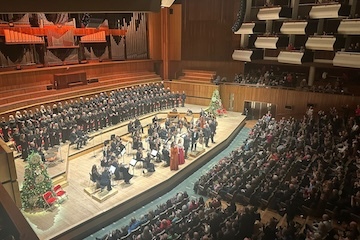
Messiah at Christmas
On Friday 12 December, the Philharmonia Chorus took part in a performance of Handel's Messiah with the Orchestra of the Age of Enlightenm at the Royal Festival Hall. The Chorus joined soprano Rowan Pierce, mezzo-soprano Jess Dandy, tenor Robert Murray, and bass-baritone Dingle Yandell. The performance was conducted by Eamonn Dougan.
-
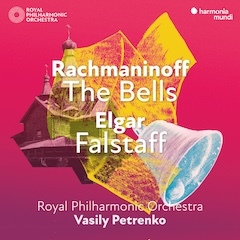
Recording of Rachmaninov's The Bells now issued by Harmonia Mundi
The recording of the performance of Rachmaninov's The Bells on 11 April 2024 in the Royal Festival Hall in which the Philharmonia Chorus took part has now been issued on the Harmonia Mundi label. The Chorus joined soprano Mirjam Mesak, tenor Pavel Petrov, bass Andrii Kymach, and the Royal Philharmonic Orchestra. The performance was conducted by Vasily Petrenko, who can be heard talking about the recording here. It is Gramophone's Editors Choice for Recording of the Month for December. The third movement can be heard here.
The recording can be obtained here.
Concerts
Beethoven - Symphony No.9 'Choral'
Leah Hawkins - soprano
Stephanie Wake-Edwards - mezzo-soprano
Martin Muehle - tenor
Derek Welton - bass
Philharmonia Chorus
Chorus Master - Gavin Carr
BBC Philharmonic Orchestra
conducted by Gianandrea Noseda
BBC Prom Concert
BBC Radio 3 live relay
Recorded for BBC TV and iPlayer
Royal Albert Hall, London
Verdi - Messa da Requiem
Ailyn Pérez - soprano
Natalie Lewis - mezzo-soprano
René Barbera - tenor
Soloman Howard - bass
Philharmonia Chorus
Chorus Master - Gavin Carr
Ukrainian Freedom Orchestra
conducted by Keri-Lynn Wilson
St Paul's Cathedral, London
Mozart - Mass in C minor
Olivia Warburton - soprano
Anita Monserrat - mezzo-soprano
Liam Bothrone - tenor
Daniel Vening - bass
Philharmonia Chorus
Chorus Master - James Platt
Philharmonia Orchestra
conducted by Tess Jackson
Bold Tendencies, Peckham
Harry Potter and the Philosopher's Stone in Concert
Philharmonia Chorus
Chorus Master - Chris Hopkins
Royal Philharmonic Concert Orchestra
conducted by Justin Freer
Royal Albert Hall, London
Harry Potter and the Philosopher's Stone in Concert
Philharmonia Chorus
Chorus Master - Chris Hopkins
Royal Philharmonic Concert Orchestra
conducted by Justin Freer
Royal Albert Hall, London
Harry Potter and the Philosopher's Stone in Concert
Philharmonia Chorus
Chorus Master - Chris Hopkins
Royal Philharmonic Concert Orchestra
conducted by Justin Freer
Royal Albert Hall, London
Harry Potter and the Philosopher's Stone in Concert
Philharmonia Chorus
Chorus Master - Chris Hopkins
Royal Philharmonic Concert Orchestra
conducted by Justin Freer
Royal Albert Hall, London
Harry Potter and the Philosopher's Stone in Concert
Philharmonia Chorus
Chorus Master - Chris Hopkins
Royal Philharmonic Concert Orchestra
conducted by Justin Freer
Royal Albert Hall, London
Bernstein - Symphony No.3 'Kaddish'
Rachel Willis-Sørensen - soprano
Judith Pisar - narrator
Leah Pisar-Haass - narrator
Philharmonia Chorus
Chorus Master - Gavin Carr
Maîtrise de Radio France
Les Siècles
conducted by Pierre Bleuse
Recorded by France Musique for future transmission
Théâtre des Champs-Elysées, Paris
Brahms - Ein deutsches Requiem
Diana Damrau - soprano
Gerald Finley - bass-baritone
Philharmonia Chorus
Chorus Master - Gavin Carr
Philharmonia Orchestra
conducted by Simone Young
Royal Festival Hall, London
Pärt - Kanon Pokajanen: Ode VII
Mahler - Symphony No.2 'Resurrection'
Miah Persson - soprano
Beth Taylor - mezzo-soprano
Philharmonia Chorus
Chorus Master - Gavin Carr
Royal Philharmonic Orchestra
conducted by Vasily Petrenko
Royal Albert Hall, London
Ravel - Daphnis et Chloé
Philharmonia Chorus
Chorus Master - Gavin Carr
Royal Philharmonic Orchestra
conduced by Vasily Petrenko
Royal Festival Hall, London
Recent Reviews
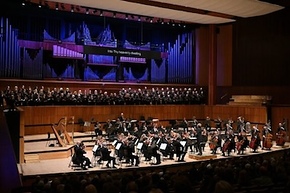
Taneyev - John of Damascus - Royal Philharmonic Orchestra conducted by Vasily Petrenko
This was another fine concert from Vasily Petrenko and the Royal Philharmonic Orchestra....The women's voices entered first, joined by the men in a long crescendo towards a powerful, almost overwhelming climax. Petrenko built a performance of considerable intensity from his singers and players: and what a sound the Philharmonia Chorus makes!....It was a fine performance, though there can be no doubt that the collective hero of the hour was the Philharmonia Chorus, singing with dramatic immediacy and stinging force.
Chris Kettle, Seen and Heard International, 20 May 2026
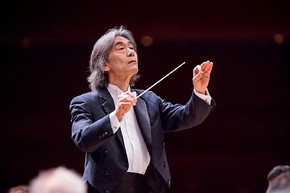
Hildegard of Bingen - O vis aeternitatis
Mahler - Symphony No.2 'Resurrection' - Philharmonia Orchestra conducted by Kent Nagano
...the Philharmonia Chorus sang with superb control.
Rebecca Franks, The Times, 20 March 2026
....with Hildegard von Bingen's spare and sinuous O vis aeternitas sung by a semi-chorus processing slowly through the auditorium, their voices wreathing the hall like a trail of incense.
The mighty Philharmonia Chorus have made the big, middle-European romantic sound their own and their exhortation to "Rise again" as the final movement got underway revealed a whole new dimension in sound.
Eleanor Knight,
Bachtrack, 21 March 2026
But it was Nagano that choreographed the great choral climax so perfectly, the Philharmonia Chorus beautifully soft on entry, the male voices later creating an imposing wall of sound, Nagano extending the silent pause after 'Bereite dich' daringly, as if himself asking, 'Prepare yourself for what?'. 'To live,' came the answer, and how beautifully Archibald crowned the chorus. The Philharmonia Chorus could only be described as fearsomely present in the work's final stretch; and yet the brass crowned it all, perfectly. Good to hear the RFH organ at full tilt, too.
Colin Clarke, Classical Explorer, 22 March 2026
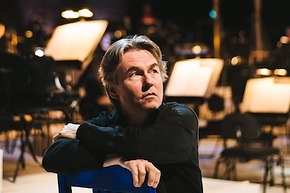
Ravel - Daphnis et Chloé - Philharmonia Orchestra conducted by Esa-Pekka Salonen
The chorus were magnificent in setting up the evocation of dawn.
David Karlin, Bachtrack, 26 February 2026
...the drama as well as the yearning erotic heat of the music came across with fabulous, ear-drenching magnificence.
Ivan Hewett, The Telegraph, 26 February 2026
The hushed opening of Act I was magical, with harps, muted horn, and flute emerging over barely audible strings. Luxuriant crescendos, including the incisive entries of the chorus, were overwhelming. The swelling
Danse religieuse was orgiastic in its abandon and there was a modern, almost jazzy swing to the youths and maidens' Danse Générale. Along the way, Salonen was an eloquent advocate for the linking sections you don't get to hear when, as is usually the case, the ballet is given incomplete. In Act III, Salonen conjured a Mediterranean warmth and an ideal balance with the chorus for the famous Lever du jour (Sunrise). A lovely flute solo for the pantomime of Pan and Syrinx followed, before players and singers rose together with an ecstatic shout of joy in the concluding Bacchanale. A truly memorable performance.
Clive Paget,
Musical America, 27 February 2026
The memorable moments were played by Samuel Coles (flute) and Rebecca Kozam (cor anglais); and not forgetting the Philharmonia Chorus who were 'ethereal-erotic' throughout: luminous
and voluptuous. However, the concluding Danse générale was just loud and brash which nevertheless was guaranteed to bring the (packed) house down: and it did with an ecstatic aplomb!
Alexander Verney-Elliott, Seen and Heard International, 27 February 2026
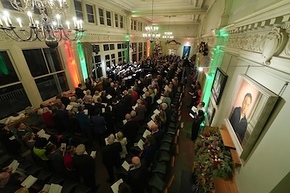
An Evening of Carols at the MCC
I launched my personal carol season at Lord's on December 1st with some absolute bangers led by the incredible Philharmonia Chorus.
Kate Mason, Metro, 19 December 2025
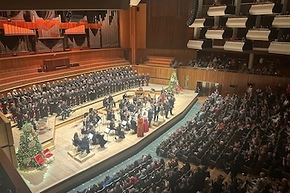
Handel - Messiah - Orchestra of the Age of Enlightenment conducted by Eamonn Dougan
There is, of course, a long tradition in this country of Christmas Messiah performances but it's not one I've ever previously participated in. This was the first time I've ever heard Messiah live, despite being quite long in the tooth, and it was terrific. I can see what I've been missing out on all these years. Handel really knew what he was doing, as do the Philharmonia Chorus, the Orchestra of the Age of Enlightenment and four excellent soloists, all under the leadership of Eamonn Dougan.
I am no expert on the scholarship behind performance practice of Messiah, although the piece is clearly robust enough to work in any number of types of presentation. What we had last night was something of a hybrid approach: small period-instrument band but large choir (numbering around a hundred). But no weighty choral-society warbling here. Eamonn Dougan encouraged a lightness of approach in his pithy, agile gestures, and the Philharmonia Chorus responded in kind, the sopranos in particular flying fluently through their many melodic runs. The final chorus saw the entire choir in glorious, summatory voice. Elsewhere, they were feisty in "He trusted in God" and generous in "wonderful.....counsellor" from "For unto us a child is born".
Bernard Hughes, The Arts Desk, 13 December 2025
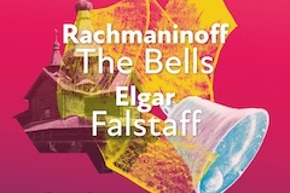
Rachmaninov - The Bells - Royal Philharmonic Orchestra conducted by Vasily Petrenko - Harmonia Mundi recording
Recording engineers Tom Lewington and Mike Hatch ensure the choir has tremendous presence, and kudos too to Gavin Carr's work as Chorus Master diction, balance, color, and tuning are exemplary. In the opening movement, we are immediately drawn in by light sparkle (mimicking sleigh bells) of the playing, and the dramatic weight of the choir's first entrance (1'48"). The reading build to a climax of refulgent colours (4'55"). Mirjam Mesak's solo in the second movement is lovely, and both she and Petrenko (who adopts a quick tempo only Rattle in Berlin/Warner Classics is faster) keep the music from becoming maudlin. Yet the performance never feels rushed, so that Rachmaninoff's luscious harmonies really depict the languid glow of love and marriage.
When I saw a timing of 8'30" for "The Loud Alarm Bells," I expected to be disappointed. Other excellent performances of this movement (Kondrashin and Rattle) are significantly faster. But Petrenko builds tension masterfully, making the percussion-laden climax (7'30") terrifying. The full-throated singing of the Philharmonia Chorus is thrillingly incisive. The final movement is again on the faster side, less dirge than anguished lament, a feeling heightened by Andril Kymach's impassioned solo. Once again, choir and orchestra build great waves of sound that make the text's grief and sorrow palpable, the gorgeous string playing in the Coda is the first signal of sadness turning to resignation and acceptance.
David A McConnell - The Classic Review, 24 November 2025
Petrenko is in his element here - and so too is the Philharmonia Chorus, particularly electrifying when unleashed at full tilt in the 'Alarm Bells' movement.
Rebecca Franks, BBC Music Magazine, December 2025
The Bells adds a 100-strong Philharmonia Chorus on peak form, coached into heavy-duty Russianness. It is Petrenko's 'loud alarum bells' that will test the resilience of your speakers. Embracing wider fluctuations of tempo and expression than Kirill Kondrashin's Melodiya classic of 1963, the dynamic onslaught is shattering.
David Gutman, The Gramophone, December 2025